
Light-led facial care
A calm session for skin that feels anything but.
A non-invasive LED facial using selected wavelengths as a supportive cosmetic option for blemish-prone skin.
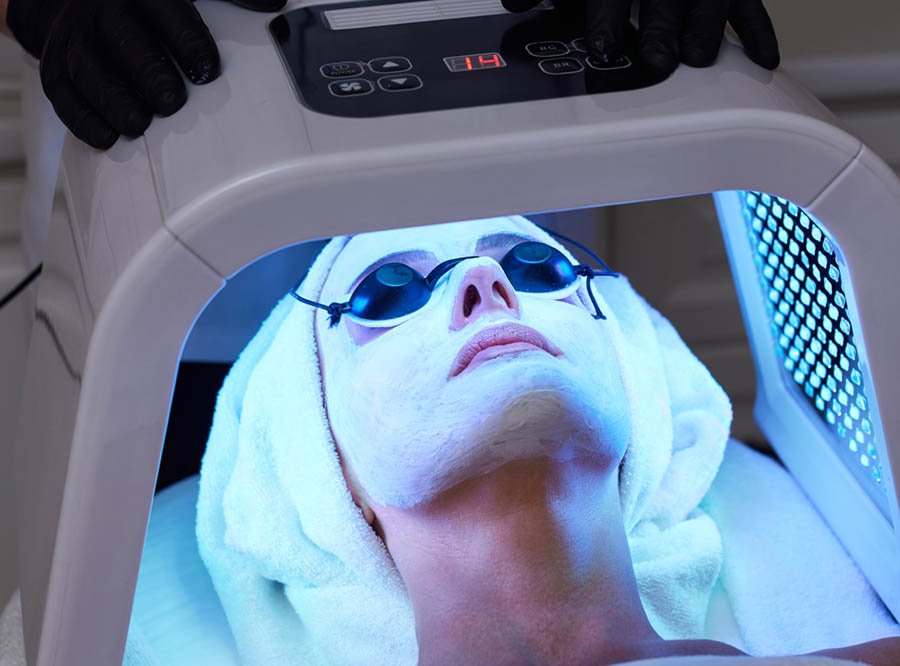
LED for blemish-prone skin
Selected light wavelengths, without heat or abrasion.
After the skin is prepared, an LED device is positioned at the appropriate distance and the eyes are protected. The selected programme exposes the skin to visible light for a set time.
This is a cosmetic supportive treatment, not a guaranteed cure for acne. Persistent, painful, scarring or suddenly worsening acne should be assessed by a GP or dermatologist.
Ask about LED availability
No peeling, needles or planned downtime.
Temporary redness, dryness, sensitivity or headache can still occur, and some medicines can increase sensitivity to light.
Realistic skin care
Support for a concern that may need medical care too.
Skin response and the useful number of sessions vary. The practitioner can discuss LED alongside a simple skincare routine without claiming an immediate or permanent result.
Tell the practitioner about photosensitive conditions, epilepsy triggered by light, eye conditions and medicines or supplements that can cause photosensitivity.
Book a skin consultationMore information
LED and acne-prone skin questions, answered.
The first step is working out whether a cosmetic facial or medical advice is the better route.
Contact usWhat happens during an LED facial?
Your skin is prepared, your eyes are protected and an LED device exposes the face to selected visible-light wavelengths for a set period.
Does LED cure acne?
No cure or guaranteed result is promised. It is offered as a supportive cosmetic treatment for blemish-prone skin, and response varies.
When should I see a doctor about acne?
Seek medical advice for painful, cystic, scarring, widespread, suddenly worsening or persistent acne, or when your skin is affecting your wellbeing.
How many sessions might I need?
A course may be suggested, but the useful number and spacing depend on your skin and response. Progress should be reviewed rather than assumed.
Who may not be suitable?
Some photosensitive conditions, light-triggered epilepsy, eye conditions and medicines or supplements that increase light sensitivity may make treatment unsuitable.
Is there downtime?
There is usually no planned downtime, although temporary redness, dryness or sensitivity can occur.
Clarity before treatment.